How to Substitute Salted Butter for Unsalted Butter in Baking
August 9, 2026
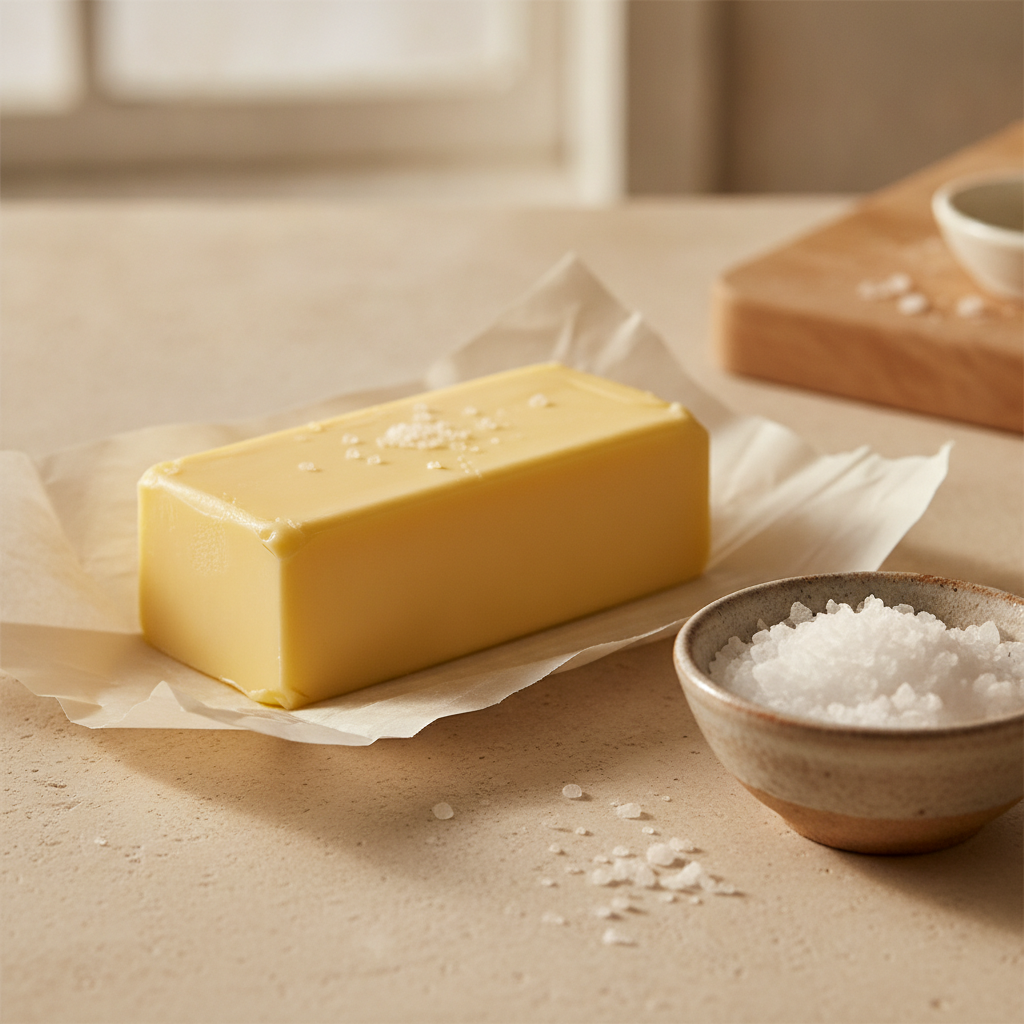
To substitute salted for unsalted butter, reduce the recipe's added salt by about 1/4 teaspoon per 1/2 cup (1 stick) of salted butter used, since that's roughly how much salt each stick contains. Bakers prefer unsalted for precise control, which matters most in delicate cakes, cookies, and buttercream, where brand variations can noticeably affect flavor.
To substitute salted for unsalted butter, use the same amount of butter but reduce the added salt in your recipe by about 1/4 teaspoon per 1/2 cup (1 stick) of salted butter.
- Swap butter 1:1 by weight or volume – no change to the butter amount.
- Cut roughly 1/4 tsp of added salt for every 1 stick (1/2 cup) of salted butter.
- It matters most in delicate bakes: shortbread, buttercream and simple cakes.
Salted butter is perfectly good for baking – you just need to account for the salt it brings. Below I’ll show you exactly how, with amounts you can trust.
How much salt is in salted butter?
Most brands add roughly 1/4 teaspoon of salt per 1/2 cup (1 stick, 113 g) of salted butter. That’s a helpful average, not a fixed law.
Salt content varies noticeably between brands and countries. Some European-style butters run saltier, while others are milder.
Because of this variation, treat 1/4 teaspoon per stick as your starting point. You can always taste and fine-tune, especially in no-bake recipes like buttercream.
Why do bakers prefer unsalted butter?
Unsalted butter gives you full control over the total salt in a recipe. Salt affects flavour, and in yeast doughs it also controls fermentation.
Unsalted butter also tends to be fresher, since salt acts as a preservative that lets salted butter sit longer. For precise bakes, control usually wins.
How to substitute salted for unsalted butter, step by step
This is the whole method – simple, but worth doing properly.
- Keep the butter quantity identical. If the recipe calls for 1 cup unsalted butter, use 1 cup salted butter.
- Calculate the salt to remove. Multiply the number of 1/2-cup portions of butter by 1/4 tsp.
- Reduce the recipe’s added salt by that amount.
- Taste where you safely can – fillings, frostings, batters that are egg-free – and adjust.
The key move is to reduce the salt, not the butter. The fat content is essentially the same, so texture is unaffected.
A real worked example
Say a chocolate chip cookie recipe uses 1 cup (2 sticks, 226 g) unsalted butter and 1 teaspoon of salt.
Two sticks of salted butter add roughly 1/2 teaspoon of salt (1/4 tsp × 2). So reduce the recipe’s added salt from 1 teaspoon to about 1/2 teaspoon.
That keeps the total salt where the recipe intended it, so your cookies taste balanced rather than salty.
When does salted vs unsalted butter matter most in baking?
The difference is most obvious in simple, butter-forward recipes with little competing flavour. That’s where extra salt has nowhere to hide.
- Buttercream and frostings: salt stands out sharply in sweet, creamy mixtures.
- Shortbread and butter cookies: few ingredients mean each one is tasted.
- Delicate sponge and pound cakes: subtle flavours are easily overwhelmed.
In robust bakes – brownies, spiced cakes, savoury pastry – a small salt difference is far less noticeable. You can often be more relaxed there.
What if the recipe has no added salt at all?
Some cookie and cake recipes list no salt. In that case, salted butter simply adds a gentle seasoning, which is often pleasant.
For very delicate recipes, though, you may still prefer unsalted for a cleaner, sweeter result. Judge by how butter-forward the bake is.
Quick reference: salt to remove per amount of butter
| Salted butter used | Approx. salt it adds | Reduce recipe salt by |
|---|---|---|
| 1/2 cup (1 stick, 113 g) | ~1/4 tsp | 1/4 tsp |
| 1 cup (2 sticks, 226 g) | ~1/2 tsp | 1/2 tsp |
| 1 1/2 cups (3 sticks, 340 g) | ~3/4 tsp | 3/4 tsp |
| 2 cups (4 sticks, 452 g) | ~1 tsp | 1 tsp |
If you’re juggling sticks, grams and cups, our butter converter makes the maths instant and error-free.
Common mistakes to avoid
- Reducing the butter instead of the salt. Fix: never cut the fat – only lower the added salt. Less butter ruins texture.
- Removing more salt than the butter adds. Fix: stick to 1/4 tsp per stick, or your bake will taste flat.
- Forgetting to scale when you change batch size. Fix: adjust salt after resizing the recipe using our recipe scaler.
- Assuming all salted butter is equal. Fix: taste frostings and fillings, and trust your palate over the average.
- Panicking over tiny amounts. Fix: in a big, boldly flavoured bake, a 1/8 tsp difference simply won’t be noticed.
Does the type of salt in your recipe change things?
Yes, a little. Table salt is denser than flaky sea salt, so the same spoon holds more.
The 1/4 tsp guideline assumes fine table salt, which is what most butter salting reflects. If your recipe uses coarse or flaky salt, reduce slightly less, since it’s less salty by volume.
For precise conversions of other ingredients by weight, our cups to grams guide keeps the rest of your recipe accurate too.
Can I go the other way – unsalted for salted?
Absolutely. Use the same amount of unsalted butter, then add about 1/4 tsp of salt per 1/2 cup (1 stick) to match.
Stir the extra salt into a dry ingredient, like the flour, so it distributes evenly. This is often the easier direction because you’re in full control.
A note on measurement accuracy
For reference, one US cup is 236.6 ml, and one US stick of butter is 1/2 cup or 113 g. Getting these right matters more than the salt tweak.
When in doubt, weigh your butter. Grams remove the guesswork that cups and sticks can introduce, especially across British and American recipes.
The USDA’s FoodData Central is a reliable place to check nutritional figures if you want to verify a specific brand.
The single most important tip
Remember this: swap the butter one-for-one and only adjust the salt. Everything else about your recipe stays exactly the same.
Salted butter is a fine everyday choice for baking once you know this small correction. Keep the 1/4-teaspoon-per-stick rule in your back pocket and you’ll rarely be caught out.
Have a favourite brand that bakes beautifully, or a salt tweak that works for you? Share your tips or ask a question in the comments – I’d love to hear how it goes.
Try it yourself
Don’t want to do the maths by hand? Use our free tool below.
Frequently asked questions
How much salt should I remove when using salted butter? Reduce your recipe’s added salt by about 1/4 teaspoon for every 1/2 cup (1 stick, 113 g) of salted butter. Keep the butter quantity the same – only the salt changes.
Can I use salted butter in buttercream? Yes, but taste as you go. Salt is very noticeable in sweet frostings, so reduce or omit any added salt and add a pinch back only if needed for balance.
Is salted butter bad for baking? Not at all. It’s perfectly usable; bakers simply prefer unsalted for precise control over total salt. Once you reduce added salt by about 1/4 tsp per stick, results are excellent.
Do all brands of salted butter contain the same amount of salt? No. Salt levels vary by brand and country, so 1/4 teaspoon per stick is an average. For frostings and fillings, taste and adjust rather than relying only on the figure.