Oven Temperature Conversion Chart (C, F, Gas, Fan)
July 24, 2026
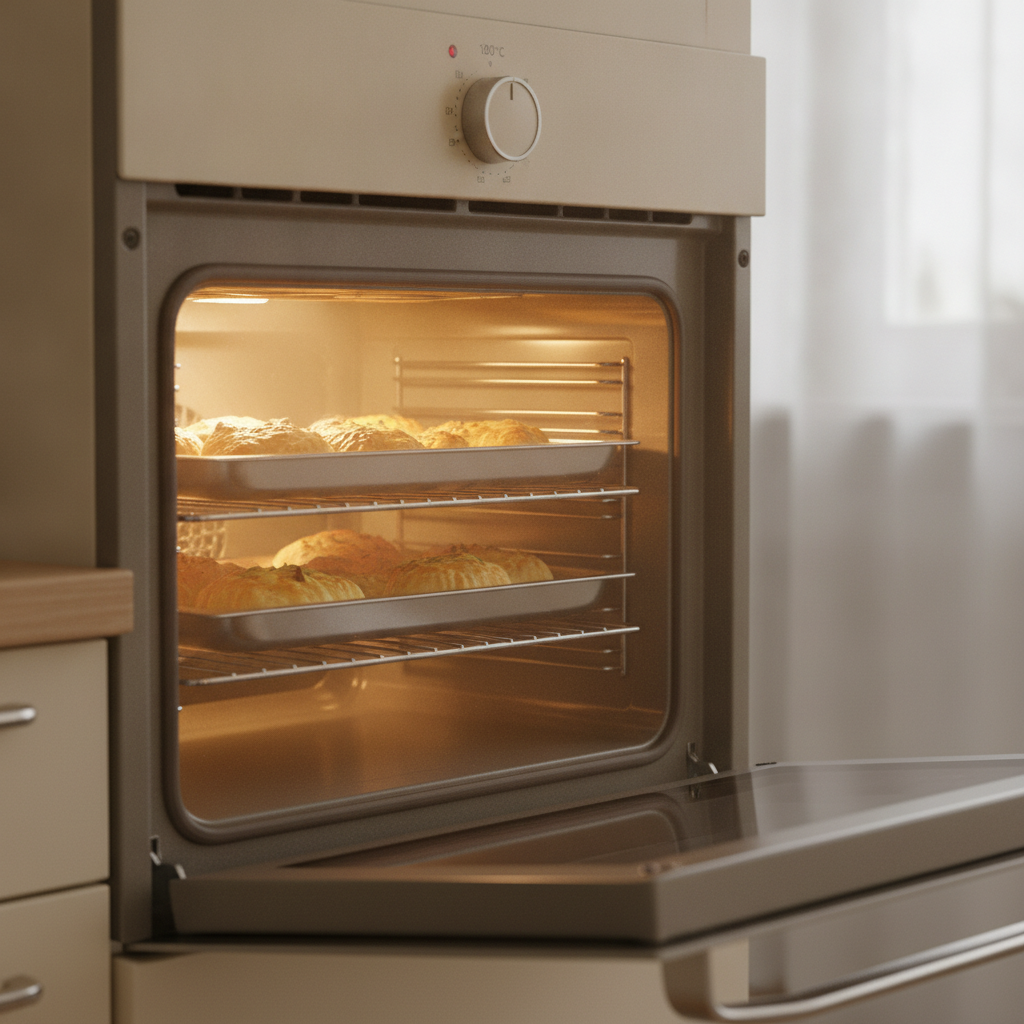
This oven temperature conversion chart makes it easy to translate between Celsius, Fahrenheit, gas marks and fan oven settings so your recipes turn out perfectly every time.
Recipes come from all over the world, and they don’t always agree on how to describe oven heat. British bakers often see gas marks, American recipes list Fahrenheit, and modern ovens display Celsius with a separate fan (convection) setting. Knowing how to convert between them quickly saves guesswork and prevents burnt biscuits or undercooked roasts.
Oven temperature conversion chart at a glance
The table below is a practical oven temperature guide covering the most common settings from cool to very hot. It shows conventional Celsius, the equivalent Fahrenheit, gas mark and the recommended fan oven temperature.
| Celsius (°C) | Fahrenheit (°F) | Gas Mark | Fan Oven (°C) | Description |
|---|---|---|---|---|
| 110 | 225 | 1/4 | 90 | Very cool |
| 120 | 250 | 1/2 | 100 | Very cool |
| 140 | 275 | 1 | 120 | Cool |
| 150 | 300 | 2 | 130 | Cool |
| 160 | 325 | 3 | 140 | Warm |
| 180 | 350 | 4 | 160 | Moderate |
| 190 | 375 | 5 | 170 | Moderately hot |
| 200 | 400 | 6 | 180 | Hot |
| 220 | 425 | 7 | 200 | Hot |
| 230 | 450 | 8 | 210 | Very hot |
| 240 | 475 | 9 | 220 | Very hot |
How to convert Celsius to Fahrenheit for ovens
The formula for celsius to fahrenheit oven conversions is simple: multiply the Celsius figure by 1.8, then add 32. For example, 180°C × 1.8 = 324, plus 32 gives 356°F, which rounds neatly to the familiar 350°F. If you’d rather skip the maths, our oven temperature converter does it instantly.
Understanding gas mark conversion
Gas marks are a British system where each step of one roughly equals 25°F. A gas mark conversion is easy to remember once you know that gas mark 4 is the standard 180°C or 350°F. Move up or down the scale in steps and you can estimate most temperatures without a chart.
- Gas mark 1 – 140°C – slow, gentle cooking such as casseroles
- Gas mark 4 – 180°C – everyday baking of cakes and biscuits
- Gas mark 6 – 200°C – roasting vegetables and meat
- Gas mark 8 – 230°C – pizzas and crisp pastry
Fan oven conversion explained
Fan (or convection) ovens circulate hot air, so they cook faster and more evenly than conventional ovens. The standard fan oven conversion is to lower the temperature by about 20°C, or drop the gas mark by one, and check food a little earlier. So a recipe calling for 200°C conventional becomes around 180°C in a fan oven.
Follow these steps for reliable results:
- Read the temperature stated in the recipe and note whether it is conventional or fan.
- If your oven is fan-assisted and the recipe is conventional, subtract 20°C.
- Start checking your bake 5–10 minutes before the stated time.
- Use an oven thermometer if you suspect your oven runs hot or cold.
Why accurate oven temperatures matter
Baking is chemistry, and small differences in heat affect rise, colour and texture. An accurate oven temperature conversion chart helps avoid dense sponges or dry roasts. For more precise cooking, you can also weigh ingredients correctly with our cups to grams converter, since volume and weight both influence how recipes behave in the oven.
Different appliances vary, so treat these figures as trusted starting points and adjust to your own oven. To learn more about the history and science behind cooking temperatures, see this overview of the gas mark system on Wikipedia.
Try it yourself
Don’t want to do the maths by hand? Use our free tool below.
Oven temperature conversion chart
| Gas mark | Fahrenheit | Celsius | Fan / convection | Description |
|---|---|---|---|---|
| ¼ | 225°F | 110°C | 90°C | Very cool |
| ½ | 250°F | 120°C | 100°C | Very cool |
| 1 | 275°F | 140°C | 120°C | Cool |
| 2 | 300°F | 150°C | 130°C | Cool |
| 3 | 325°F | 170°C | 150°C | Warm |
| 4 | 350°F | 180°C | 160°C | Moderate |
| 5 | 375°F | 190°C | 170°C | Moderately hot |
| 6 | 400°F | 200°C | 180°C | Fairly hot |
| 7 | 425°F | 220°C | 200°C | Hot |
| 8 | 450°F | 230°C | 210°C | Very hot |
| 9 | 475°F | 240°C | 220°C | Very hot |
For a fan (convection) oven, set it about 20°C lower than the conventional Celsius temperature.
Fan vs conventional: the 20°C rule
A fan (convection) oven circulates hot air, so it cooks faster and more evenly than a conventional oven at the same dial setting. The standard rule is to set a fan oven about 20°C lower than the conventional Celsius temperature a recipe gives — or drop one gas mark. So a recipe that says 180°C conventional becomes roughly 160°C fan. Most cookbooks quote conventional temperatures unless they say “fan”, so check before you preheat.
Gas marks and getting the temperature right
Gas marks are a UK scale where each step is about 14°C (25°F). Whatever oven you have, two things trip people up:
- Ovens lie. Many run 10–20°C hotter or cooler than the dial. A cheap oven thermometer is the fastest way to fix mystery baking failures.
- Preheat fully and resist opening the door — the temperature drops sharply every time you do, which is why cakes sink.
Cooking with an air fryer instead? See our oven to air fryer converter, or convert individual temperatures with the Celsius to Fahrenheit chart.
Frequently asked questions
What is 180°C in Fahrenheit and gas mark? 180°C equals 350°F and gas mark 4, which is the standard moderate oven setting for most cakes and biscuits. In a fan oven, use around 160°C.
How do I convert a conventional oven temperature to fan? Simply subtract about 20°C from the conventional Celsius temperature, or drop the gas mark by one, and check your food a few minutes earlier.
Why does my fan oven cook faster than the recipe says? Fan ovens circulate hot air, distributing heat more efficiently, so they cook faster and more evenly. That’s why you lower the temperature by roughly 20°C.