Active Dry vs. Instant Yeast: How to Substitute One for the Other
August 7, 2026
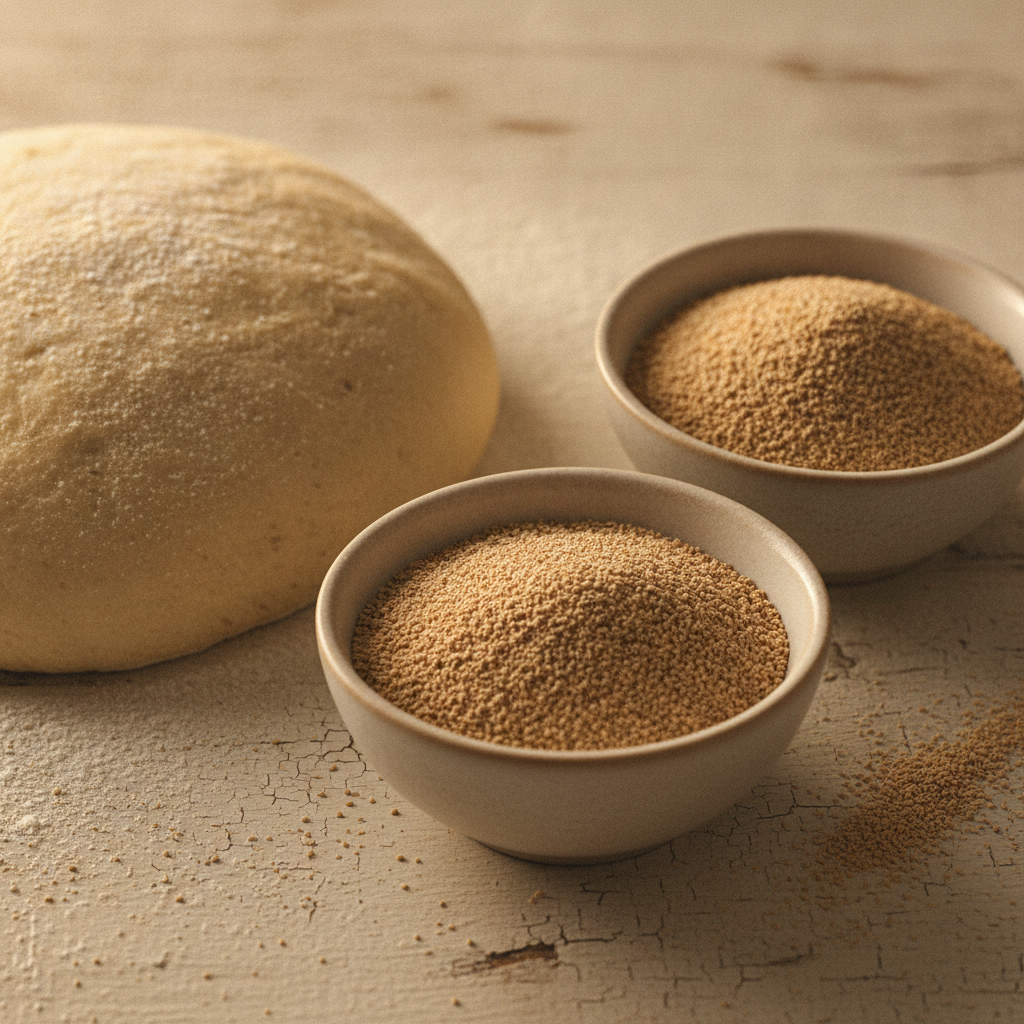
For active dry to instant yeast conversion, use about 25 percent less instant when replacing active dry, or 25 percent more active dry for instant. Instant has finer granules and mixes straight into dry ingredients, while active dry is traditionally bloomed in warm water first. Both work in most recipes, though instant sometimes needs one rise fewer.
The active dry to instant yeast conversion is simple: use about 25% less instant yeast when replacing active dry, or 25% more active dry when a recipe calls for instant. Both work in almost any bread.
- Replacing active dry with instant? Use roughly 25% less instant yeast.
- Replacing instant with active dry? Use roughly 25% more active dry yeast.
- Instant can go straight into the flour; active dry is traditionally bloomed in warm water first.
Both yeasts are the same species. The differences come down to granule size, moisture, and how you add them to the dough.
What is the difference between instant vs active dry yeast?
Both are dried forms of Saccharomyces cerevisiae, the same living yeast. The processing and grain size are what set them apart.
Active dry yeast has larger granules and a protective coating of dead cells. It is traditionally dissolved in warm liquid before use.
Instant yeast (also sold as fast-action, quick-rise, or bread-machine yeast) has finer granules. It dissolves quickly and can be mixed straight into the dry ingredients.
The key takeaway: instant yeast is more active per gram, so you need slightly less of it.
Do I need to bloom instant yeast?
No. That is the main convenience of instant yeast. Its fine granules hydrate fast during mixing.
Active dry yeast benefits from blooming yeast in warm liquid (about 38–43°C) first. This proves the yeast is alive and gives it a head start.
How much instant yeast replaces active dry?
The reliable rule is to use 25% less instant yeast than the active dry called for. Modern active dry is more robust than older versions, so this ratio works well.
Here is the maths in practice.
| Active dry yeast | Instant yeast (use ~25% less) |
|---|---|
| 1 tsp | ¾ tsp |
| 2¼ tsp (1 packet, 7g) | 1¾ tsp (about 5.25g) |
| 1 tbsp | 2¼ tsp |
| 7g | about 5.25g |
Going the other way? To substitute active dry for instant, multiply the instant amount by 1.25 (add 25% more).
A real-world example
Say a loaf recipe calls for 7g (2¼ tsp) active dry yeast, but you only have instant.
- Multiply 7 by 0.75 = 5.25g instant yeast (a scant 1¾ tsp).
- Skip the blooming step entirely.
- Whisk the instant yeast directly into the flour and salt.
- Add your warm liquid and mix as normal.
In truth, if you used the full 7g of instant here, your bread would still turn out fine. The 25% adjustment just keeps flavour and rise timing closer to the original.
How do I use each yeast step by step?
Using active dry yeast
- Warm your liquid to about 38–43°C (comfortably warm, not hot).
- Stir in the active dry yeast and a pinch of sugar.
- Wait 5–10 minutes until foamy. This is blooming yeast.
- Mix into your flour and continue with the recipe.
Using instant yeast
- Whisk the instant yeast straight into your dry flour.
- Add warm liquid (same temperature range is fine).
- Mix, knead, and rise as usual.
Instant yeast often rises faster, so keep an eye on your dough rather than the clock.
Does instant yeast need fewer rises?
Sometimes, yes. With instant yeast you can occasionally skip the first rise and shape straight after mixing, especially with quick-rise varieties.
For the best flavour, I still recommend a proper first rise where time allows. Slower fermentation develops a deeper, tastier crumb.
Common mistakes to avoid
- Killing yeast with hot liquid. Fix: keep liquid at 38–43°C. Above roughly 50°C the yeast dies.
- Blooming instant yeast unnecessarily. Fix: it does no harm, but there is no need. Add it straight to the flour.
- Not blooming old active dry yeast. Fix: always proof if unsure. No foam after 10 minutes means dead yeast.
- Forgetting to adjust the amount. Fix: apply the 25% rule so rise times stay predictable.
- Adding salt directly onto yeast. Fix: mix salt into the flour first; direct contact can weaken yeast.
Can I always swap one for the other?
In the vast majority of home recipes, yes. Both leaven bread, rolls, pizza, and enriched doughs equally well.
The differences are timing and method, not results. Once you understand the active dry to instant yeast conversion, you can bake with whatever is in the cupboard.
If you want the numbers done for you, our yeast converter handles the maths instantly. It is handy for scaling packets up or down.
Working across weights and spoons too? Try our cups to grams converter for accurate flour and liquid measures. And if you are doubling a loaf, the recipe scaler keeps every ingredient in proportion.
What about fresh yeast?
Fresh (cake) yeast is a third option, common in Europe. As a rough guide, 1 part instant yeast equals about 3 parts fresh yeast by weight.
For deeper background on yeast types, the King Arthur Baking yeast reference is a genuinely reliable read.
The one tip to remember
If you take away just one thing: use 25% less when swapping active dry for instant, and skip the bloom for instant yeast. That single adjustment keeps your rise times and flavour on track.
Have a favourite yeast trick or a question about a stubborn dough? Share it in the comments below. I always enjoy hearing how your bakes turn out.
Try it yourself
Don’t want to do the maths by hand? Use our free tool below.
Frequently asked questions
How much instant yeast do I use instead of 1 packet of active dry? One packet of active dry yeast is 2¼ teaspoons (7g). Use about 25% less instant, which is roughly 1¾ teaspoons or 5.25g. You can skip the blooming step and add it straight to the flour.
Can I substitute active dry for instant yeast in the same recipe? Yes. Use about 25% more active dry yeast than the instant amount, and bloom it in warm liquid (38–43°C) for 5–10 minutes first. The dough may need slightly longer to rise.
Do I need to bloom instant yeast before using it? No. Instant yeast has fine granules that hydrate quickly, so you can whisk it straight into your dry ingredients. Blooming does no harm but is unnecessary and saves no time.
Why did my yeast not foam when blooming? The most likely reasons are dead or expired yeast, or liquid that was too hot and killed it. Keep liquid between 38 and 43°C, and if there is no foam after 10 minutes, the yeast is no longer active.