Grams to Cups: Conversion Chart by Ingredient
July 14, 2026
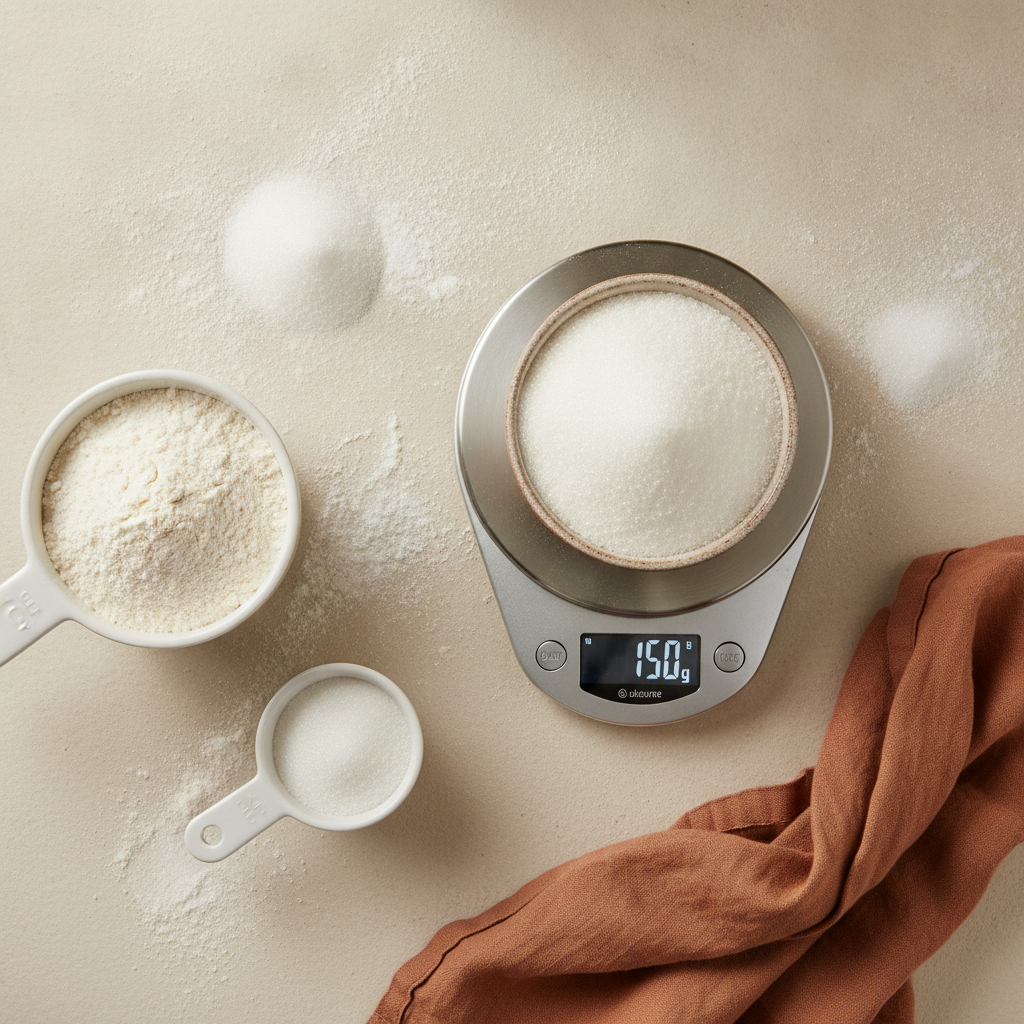
To convert grams to cups, divide the weight by the ingredient’s grams-per-cup: about 125 g of flour, 200 g of sugar, or 227 g of butter per US cup. So 250 g of flour is roughly 2 cups, while 250 g of sugar is about 1¼ cups.
Converting grams to cups sounds simple, but the answer changes with every ingredient — a cup of flour and a cup of sugar weigh very differently. This guide gives you the correct grams to cups values for common baking ingredients, plus a free converter.
Cups to grams conversion chart
| Ingredient | 1 cup | ¾ cup | ⅔ cup | ½ cup | ⅓ cup | ¼ cup |
|---|---|---|---|---|---|---|
| All-purpose flour | 125 g | 94 g | 83 g | 63 g | 42 g | 31 g |
| Bread flour | 130 g | 98 g | 87 g | 65 g | 43 g | 33 g |
| Cake flour | 115 g | 86 g | 77 g | 58 g | 38 g | 29 g |
| Granulated sugar | 200 g | 150 g | 133 g | 100 g | 67 g | 50 g |
| Brown sugar (packed) | 220 g | 165 g | 147 g | 110 g | 73 g | 55 g |
| Icing (powdered) sugar | 120 g | 90 g | 80 g | 60 g | 40 g | 30 g |
| Butter | 227 g | 170 g | 151 g | 114 g | 76 g | 57 g |
| Cocoa powder | 100 g | 75 g | 67 g | 50 g | 33 g | 25 g |
| Rolled oats | 90 g | 68 g | 60 g | 45 g | 30 g | 23 g |
| Honey | 340 g | 255 g | 227 g | 170 g | 113 g | 85 g |
| Cornstarch | 120 g | 90 g | 80 g | 60 g | 40 g | 30 g |
| Milk | 240 g | 180 g | 160 g | 120 g | 80 g | 60 g |
Weights are approximate — flours and sugars vary with how they are scooped. Spoon into the cup and level off for best accuracy.
Why grams to cups depends on the ingredient
Grams measure weight; cups measure volume. Because ingredients have different densities, there is no single grams to cups number. Flour is light and airy, so it takes more volume to reach 100 g than dense honey does.
Grams to cups chart
| Ingredient | 100 g in cups | 1 cup in grams |
|---|---|---|
| All-purpose flour | 0.8 cup | 125 g |
| Granulated sugar | 0.5 cup | 200 g |
| Brown sugar (packed) | 0.45 cup | 220 g |
| Butter | 0.44 cup | 227 g |
| Cocoa powder | 1.2 cups | 85 g |
| Rolled oats | 1.1 cups | 90 g |
How to convert grams to cups
- Identify your ingredient and its grams-per-cup value (see the chart).
- Divide your weight in grams by that value.
- The result is the amount in cups.
Grams to cups, the easy way
Our Cups to Grams converter works both ways and is accurate by ingredient — switch the units to go from grams to cups in one tap. Baking a full recipe? The Recipe Scaler adjusts every amount at once.
For more on why weight and volume differ, see the cup unit.
Reading a metric recipe in cups
Recipes from the UK, Europe and Australia usually list ingredients in grams, which is a problem if your measuring kit is cups and spoons. The key thing to understand is that you must convert per ingredient, because equal weights take up very different volumes: 100 g of flour is about ⅘ of a cup, but 100 g of granulated sugar is only about ½ a cup. There is no single “grams to cups” number that works for everything.
When grams-to-cups is only an estimate
Converting weight to volume is inherently approximate for dry goods, because how you fill the cup changes the result. For forgiving recipes — pancakes, muffins, most cookies — a good conversion is perfectly fine. For anything where precision drives success, such as bread, macarons or laminated pastry, a set of scales will always beat cups.
- Watch the spoon standard too: a US tablespoon is 15 ml, but an Australian tablespoon is 20 ml.
- Level dry cups; do not heap or pack (except brown sugar).
Going the other way? Use our cups to grams converter to turn your own cup-based recipes into weights.
Frequently asked questions
How many cups is 100 g of flour? About 0.8 of a US cup of all-purpose flour.
Is grams to cups the same for all ingredients? No. Each ingredient has its own density, so the grams to cups value differs.
Are these US or metric cups? These use the US cup (236.6 ml). A UK/metric cup is 250 ml.