Can I Bake a Cake in a Loaf Pan? (How to Convert Pan Sizes)
August 11, 2026
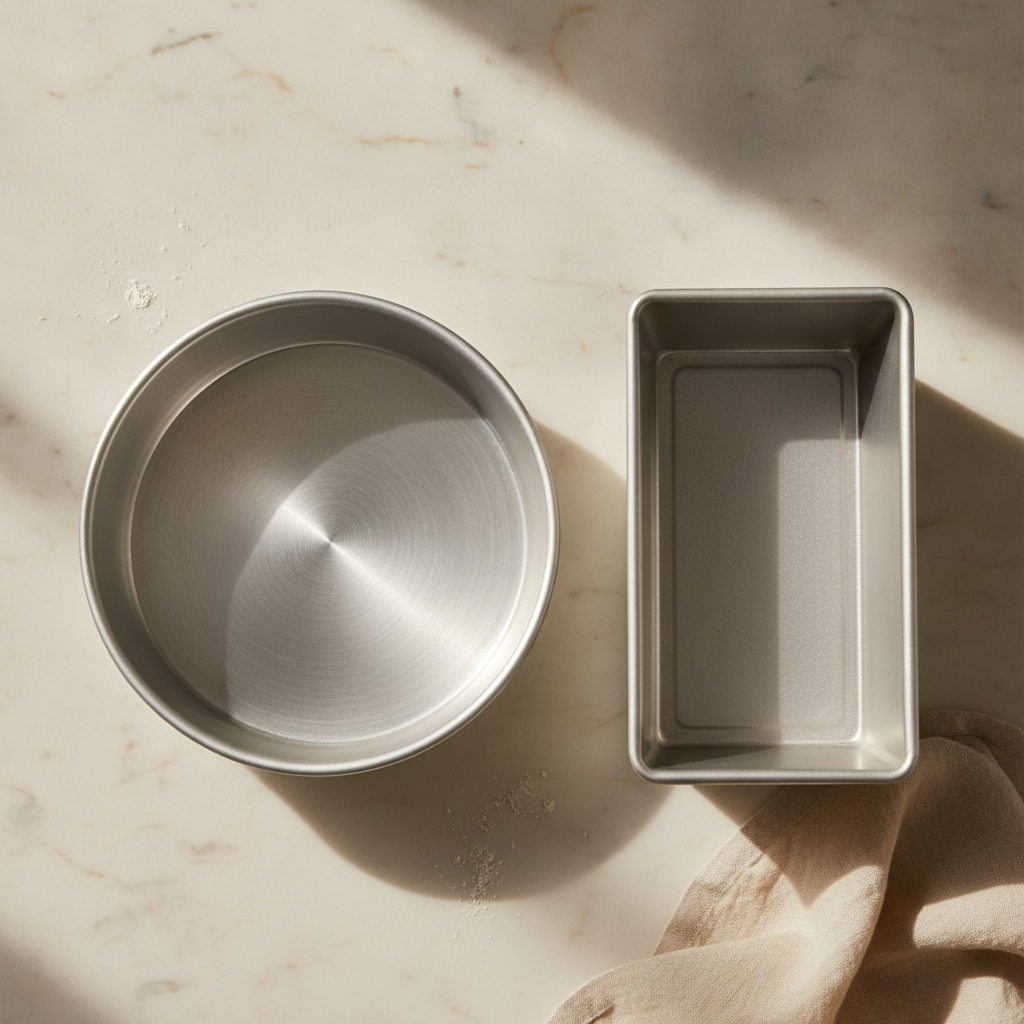
Yes, baking cake in a loaf pan works whenever the batter volume fits, since an 8-inch round holds about the same as a 9×5 loaf. Measure any pan by filling it with water and noting the cups or milliliters. Fill only two-thirds full, and bake deeper batter longer at a slightly lower temperature.
Baking cake in a loaf pan is absolutely fine, as long as the batter volume fits and you fill the pan only two-thirds full. A deeper pan simply needs a longer, gentler bake so the middle sets before the edges dry out.
- Match the volume, not the shape: an 8-inch round holds roughly the same batter as a 9×5-inch loaf pan.
- Never fill past two-thirds, or the batter overflows as it rises.
- Deeper batter bakes longer, often 10-15°C lower, so the centre cooks through evenly.
Can I really bake any cake in a loaf pan?
Yes, most cake recipes adapt well to a loaf pan. The batter doesn’t care about the shape of its container.
What matters is whether the pan can hold the volume without overflowing. A loaf tin is narrower and deeper, so the batter sits taller and bakes more slowly.
This works beautifully for pound cakes, sponges, banana bread and simple butter cakes. Delicate layer cakes and chiffon cakes are the exceptions, as their tall structure can struggle in a deep tin.
How do I measure my pan’s volume with the water method?
The most reliable way to compare pans is by pan volume, and water tells you the truth every time. Forget guessing from the label.
- Place your empty pan on the counter.
- Fill it to the very brim with water, using a measuring jug so you count as you go.
- Note the total in cups or millilitres.
- Repeat for the pan your recipe calls for.
If both pans hold the same volume, the swap is straightforward. A US cup is 236.6 ml, so 6 cups equals about 1,420 ml.
For a quick shortcut without water, our baking pan converter compares common pan sizes instantly.
What are the volume equivalents for converting cake pan sizes?
Here are the everyday equivalents I rely on when converting cake pan sizes in my own kitchen. These are approximate but dependable.
| Pan | Approx. volume (level to brim) |
|---|---|
| 8-inch round (2 in deep) | ~6 cups / 1,420 ml |
| 9-inch round (2 in deep) | ~8 cups / 1,900 ml |
| 9×5-inch loaf | ~8 cups / 1,900 ml |
| 8×4-inch loaf | ~6 cups / 1,420 ml |
| 8-inch square | ~8 cups / 1,900 ml |
So an 8-inch round to loaf pan swap works best with an 8×4-inch loaf. A larger 9-inch round matches a full 9×5-inch loaf.
Remember these are brim-full figures. Since you only fill to two-thirds, an 8-inch round cake batter sits comfortably in a 9×5-inch loaf.
How does batter depth change the bake time?
This is the part most people miss. When batter sits deeper, heat takes longer to reach the centre.
A loaf pan concentrates the batter into a taller column. That means batter depth bake time increases, sometimes by 15-25 minutes over a round tin.
To avoid a dry crust with a raw middle, drop the oven temperature by 10-15°C and extend the bake. A gentler heat lets the centre catch up.
A worked example
Say your recipe bakes an 8-inch round at 180°C for 30 minutes. Moving to a 9×5-inch loaf, I set the oven to 165°C and start checking at 45 minutes.
Insert a skewer into the deepest point. It should come out with a few moist crumbs, not wet batter.
If the top browns too fast, tent it loosely with foil for the final 15 minutes.
How full should I fill a loaf pan?
Fill it no more than two-thirds full, which leaves room for the cake to dome as it rises. Overfill and you’ll clean the oven floor.
If your batter overflows the two-thirds line, bake the excess in a couple of muffin cups. They cook in about 18-20 minutes.
Scaling a recipe up or down to fit? Our recipe scaler keeps every ingredient in proportion for you.
Common mistakes to avoid
- Filling the pan too full. Fix: stop at two-thirds and bake leftovers as muffins.
- Keeping the same temperature. Fix: lower by 10-15°C for a deeper pan so the middle sets.
- Testing too early. Fix: add 15-25 minutes and check the deepest point with a skewer.
- Ignoring the crust. Fix: tent with foil once golden to stop it drying while the centre finishes.
- Skipping the volume check. Fix: use the water method before you pour, not after.
What about greasing and lining a loaf pan?
Deep cakes cling more, so lining pays off. Grease the tin, then lay a strip of baking paper along the length with overhang on both sides.
This paper sling lifts the whole cake out cleanly once cooled. It’s the single easiest way to avoid a broken loaf.
If you’re converting butter quantities for a richer pound cake, our butter converter handles grams, sticks and tablespoons.
For deeper guidance on pan geometry, the King Arthur Baking pan volume reference is a genuinely useful read.
The most important thing to remember
Match the volume first, then adjust the bake. If both pans hold the same water, your batter will be happy, and a slightly lower temperature protects the centre.
Have you baked a favourite cake in a loaf tin, or hit a snag along the way? Share your tips or ask a question in the comments below, and I’ll happily help.
Try it yourself
Don’t want to do the maths by hand? Use our free tool below.
Frequently asked questions
Can I bake an 8-inch round cake recipe in a loaf pan? Yes. An 8-inch round holds about 6 cups (1,420 ml), the same as an 8×4-inch loaf, and fits comfortably in a 9×5-inch loaf. Lower the oven by 10-15°C and add 15-25 minutes to the bake time.
Why does a loaf pan take longer to bake than a round pan? A loaf pan is narrower and deeper, so the batter sits taller. Heat takes longer to reach the centre, meaning you need extra time and often a slightly lower temperature to cook the middle without drying the edges.
How full should I fill a loaf pan with cake batter? No more than two-thirds full. This leaves room for the cake to rise and dome without overflowing. Bake any excess batter as muffins for about 18-20 minutes.
How do I measure a pan's volume accurately? Use the water method: fill the empty pan to the brim with water using a measuring jug, then note the total in cups or millilitres. Compare that figure with the pan your recipe specifies before swapping.