Fresh Yeast to Dried Yeast: Conversion Both Ways
August 4, 2026
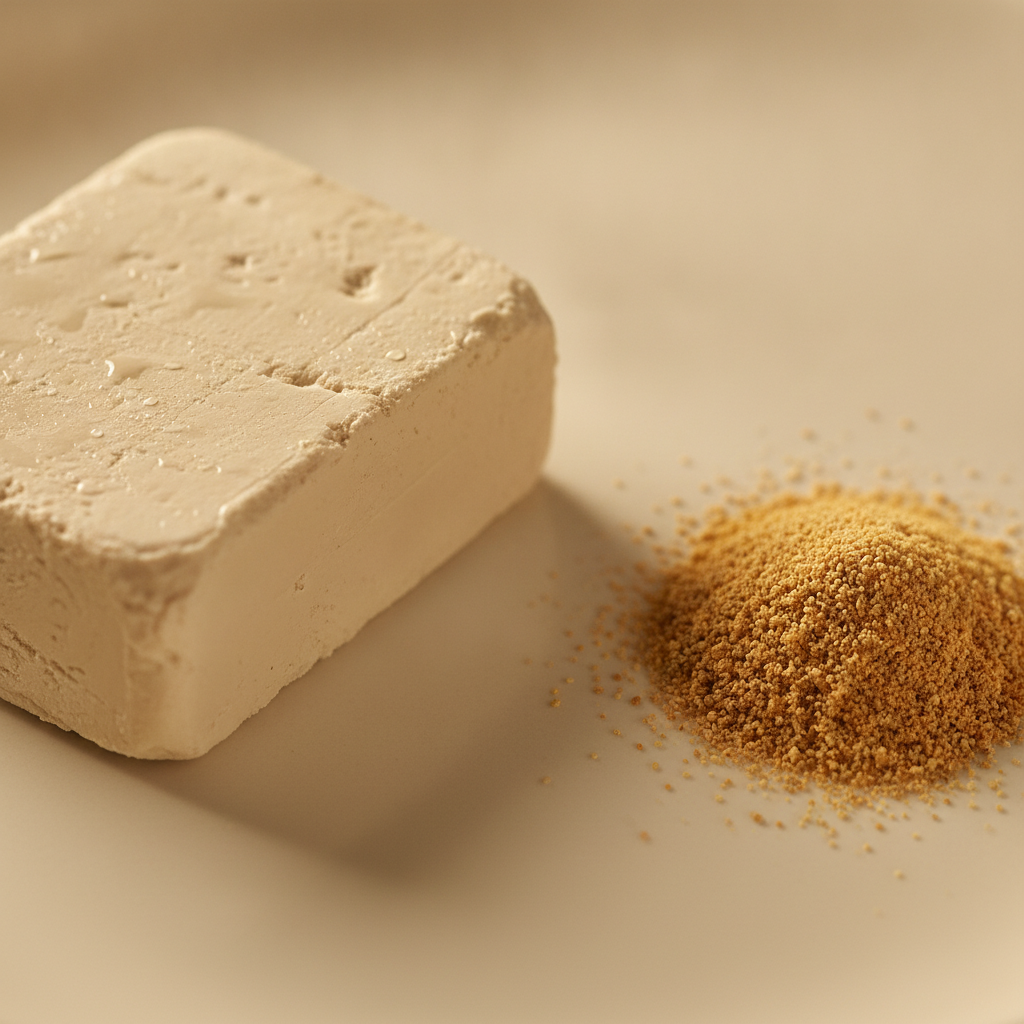
To convert fresh yeast to dried yeast, use about 0.4 grams of active dry yeast or 0.33 grams of instant yeast per gram of fresh yeast, roughly a third to a half as much. Going the other way, multiply dried yeast by about 2.5 to 3 for the fresh equivalent.
Part of our Baking Substitutions guide.
To convert fresh yeast to dried yeast, use about 0.4 g active dry or 0.33 g instant for every 1 g fresh yeast – roughly a third to a half as much dried.
- 1 g fresh yeast ≈ 0.4 g active dry yeast ≈ 0.33 g instant yeast.
- Going the other way: multiply active dry by about 2.5, or instant by about 3, to get fresh.
- Active dry usually needs blooming in warm liquid; fresh and instant do not.
These ratios come straight from years of home baking, and they hold up across breads, buns and enriched doughs. The numbers below let you swap confidently in either direction.
How do I convert fresh yeast to dried yeast?
The maths is simple once you know the multipliers. Fresh yeast holds a lot of water, so you always need less of the dried forms.
To convert fresh yeast to dry yeast, multiply the fresh weight by 0.4 for active dry, or by 0.33 for instant.
- Fresh → active dry: multiply by 0.4
- Fresh → instant: multiply by 0.33
A quick rule of thumb: use half as much active dry, or a third as much instant. It is close enough for everyday loaves.
A worked example
Say your recipe calls for 15 g fresh yeast but you only have dried in the cupboard.
- For active dry: 15 × 0.4 = 6 g (about 2 teaspoons).
- For instant: 15 × 0.33 = 5 g (about 1½ teaspoons).
That 15 g fresh block turns into a small, easily measured spoonful of dried yeast.
Fresh yeast to dried yeast chart (both ways)
Keep this yeast conversion chart handy for the amounts bakers actually use. Values are rounded for practical spoon measuring.
| Fresh yeast | Active dry | Instant |
|---|---|---|
| 5 g | 2 g | 1.7 g |
| 10 g | 4 g | 3.3 g |
| 15 g | 6 g | 5 g |
| 20 g | 8 g | 6.6 g |
| 25 g | 10 g | 8.3 g |
| 42 g (1 cube) | 17 g | 14 g |
To go from dried yeast to fresh yeast, reverse it: multiply active dry by 2.5, or instant by 3.
For example, 7 g instant (a typical sachet) equals roughly 21 g fresh yeast. For faster conversions any direction, try our yeast converter.
What is the difference between fresh, active dry and instant yeast?
All three are the same organism, just processed and dried to different degrees. That difference changes how you use them.
Fresh yeast
Also called cake or compressed yeast, it is soft, crumbly and beige. It has the shortest shelf life – about two weeks chilled – and many bakers love its gentle flavour.
Active dry yeast
This comes as larger granules with the cells in a dormant state. Active dry traditionally needs blooming in warm liquid before use.
Instant yeast
Also sold as fast-action or easy-bake, instant has finer particles and dissolves quickly. You can stir it straight into the flour with no blooming needed.
Which yeasts need blooming, and which don’t?
Blooming means rehydrating yeast in warm liquid to check it is alive before mixing. Not every type requires it.
- Fresh yeast: crumble into the liquid or flour; no separate proofing needed.
- Active dry: dissolve in warm liquid (about 40°C) for 5–10 minutes until foamy.
- Instant: add dry to the flour; no blooming required.
If you are unsure whether old yeast still works, bloom it – no foam means it is dead. Modern active dry can often be mixed dry too, but blooming is the safe habit.
How do I swap yeast types in a bread recipe?
Swapping is straightforward once you have the right weight. Follow these steps for a reliable loaf.
- Work out the new amount using the chart or the multipliers above.
- If switching to active dry, warm a little of the recipe’s liquid (not extra) and bloom the yeast in it.
- If switching to instant, mix it directly into the dry flour.
- Watch the dough, not the clock – rise times vary, so judge by doubling in size.
Keep the total liquid the same; the blooming liquid comes from within the recipe, not on top. If you are also changing batch size, our recipe scaler keeps everything in proportion.
Common mistakes to avoid
- Using the same weight of dried as fresh. Fix: always reduce dried to a third or half, or your dough over-proofs and tastes yeasty.
- Blooming in liquid that is too hot. Fix: keep it around 40°C; above 50°C you kill the yeast.
- Adding extra water for blooming. Fix: take the blooming liquid from the recipe’s total, so hydration stays correct.
- Expecting identical rise times. Fix: instant is often fastest; let the dough guide you, not the timer.
- Using expired yeast. Fix: test with a bloom first, especially with older active dry.
Getting these right matters most in enriched doughs. If you are converting a whole recipe’s worth of measures, our recipe conversion chart covers the common swaps too.
Does the yeast type change the flavour or timing?
Slightly, yes. Fresh yeast gives a subtly milder, some say sweeter, flavour that traditional bakers prize.
Instant and active dry perform almost identically in the finished loaf. The bigger variable is your dough temperature and proofing time, not the yeast brand.
For deeper detail on yeast types, the King Arthur Baking yeast reference is a genuinely useful, reliable read.
Final tip and over to you
The one thing to remember: dried yeast is more concentrated, so use roughly a third to a half as much as fresh, then judge the dough by how it rises.
Get that ratio right and any bread recipe will happily accept whichever yeast is in your cupboard. Have a favourite conversion trick or a question about a specific recipe? Share it in the comments – we love hearing how your loaves turn out.
Try it yourself
Don’t want to do the maths by hand? Use our free tool below.
Frequently asked questions
How much dried yeast equals 42 g of fresh yeast? A standard 42 g fresh yeast cube equals about 17 g active dry yeast or 14 g instant yeast. Use roughly a third to a half of the fresh weight.
Can I use instant yeast instead of fresh yeast? Yes. Use about a third of the fresh weight in instant yeast – so 15 g fresh becomes around 5 g instant. Mix instant straight into the flour with no blooming needed.
Do I need to bloom active dry yeast when swapping from fresh? Traditionally yes. Dissolve active dry in some of the recipe’s warm liquid (about 40°C) for 5–10 minutes until foamy, then continue as normal. Fresh and instant need no blooming.
How do I convert dried yeast back to fresh yeast? Multiply active dry yeast by about 2.5, or instant yeast by about 3, to get the fresh equivalent. So 7 g instant is roughly 21 g fresh yeast.