How to Measure Sticky Ingredients (Honey, Molasses, Syrup) Without the Mess
July 29, 2026
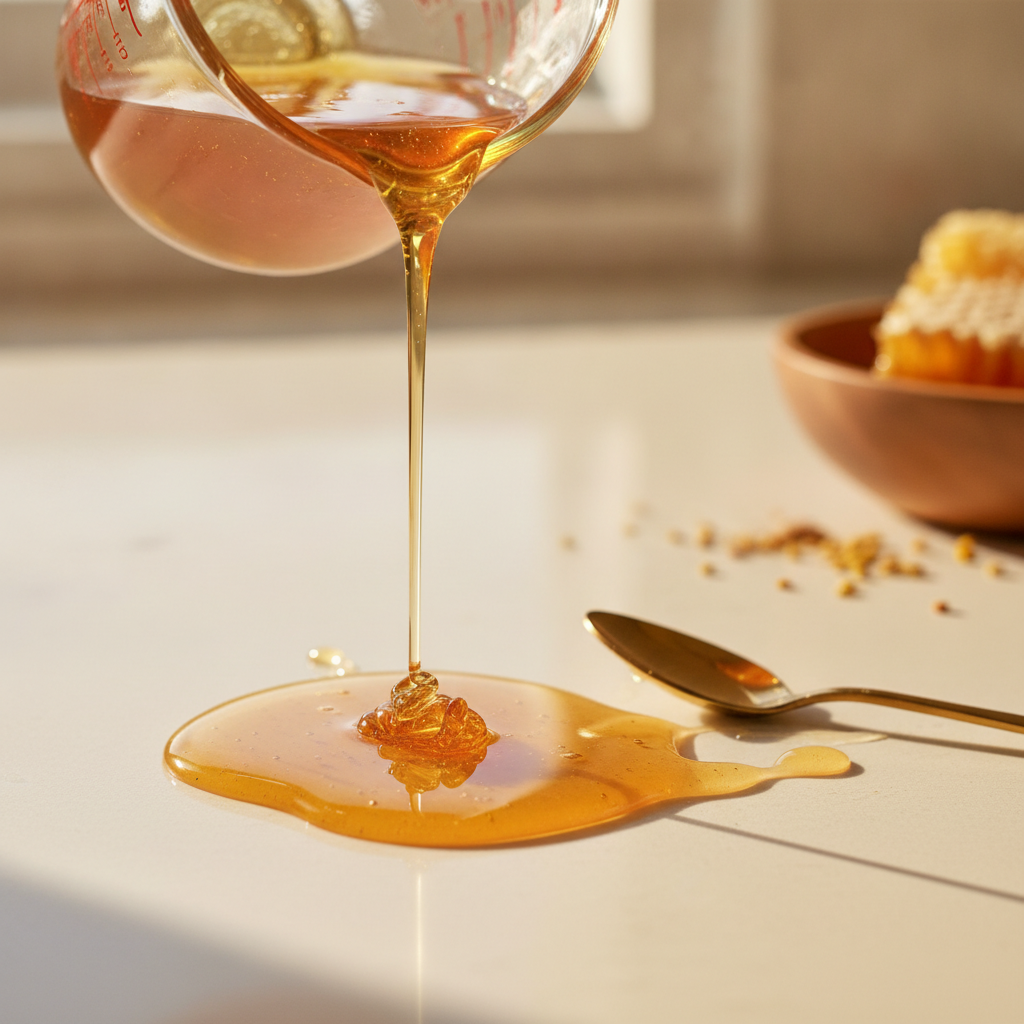
How to measure sticky ingredients is easy once you lightly grease your cup or spoon with oil or cooking spray, or warm it first, so the honey, molasses or syrup slides straight out with almost nothing left behind.
Part of our How to Measure Baking Ingredients guide.
- Grease the measuring cup or spoon with a thin film of oil or cooking spray before you scoop, and the sticky ingredient releases cleanly.
- Warming the spoon (or the honey itself) makes it flow faster and cling less.
- Weighing on a digital scale is the most accurate and least messy method of all.
These small tricks save real ingredients. A tablespoon of honey left clinging to a measuring cup is roughly 5–7g wasted every single time.
How do you measure sticky ingredients without the mess?
The core problem is that honey, treacle and syrup cling to whatever they touch. The fix is to stop them sticking in the first place.
There are two reliable tricks, plus one method that skips the mess entirely. Choose based on what you have to hand.
The cooking spray (or oil) trick
This is the classic cooking spray trick, and it works brilliantly for measuring honey in a cup or on a spoon.
- Lightly coat the inside of your measuring cup or spoon with a spritz of cooking spray, or wipe it with a little neutral oil on kitchen paper.
- Pour or spoon in your sticky ingredient up to the line.
- Tip it into the bowl — it will slide out almost completely.
A thin film is all you need; too much oil can throw off delicate recipes. If your recipe already includes oil or melted butter, measure that first in the same cup, then the honey slides out on the residue.
The hot water trick
Warmth thins sticky liquids and stops them gripping the metal or plastic.
- Dip your spoon or cup in just-boiled water for a few seconds.
- Shake off the excess water (a stray drop or two won’t matter).
- Measure straight away while it’s warm, and the syrup releases smoothly.
For stubborn set honey or cold molasses, stand the jar in a bowl of hot water for a few minutes first. Gently warmed honey pours like a dream.
How to measure molasses and treacle specifically
Molasses and black treacle are the stickiest of the lot, so they need the most help.
Grease first, then use the hot water trick together for the cleanest result. When learning how to measure molasses, always grease the spoon before you dip.
For a gingerbread that calls for 2 tablespoons of molasses, a greased, slightly warm spoon delivers the full amount without leaving half of it behind. That accuracy matters — molasses affects both flavour and the moisture balance of the bake.
Is it better to weigh sticky ingredients?
Yes. For sticky ingredients, weighing is genuinely the best method available.
You place your bowl on a digital scale, press tare to zero, then squeeze or pour the honey straight in until you hit the target weight. Nothing clings to a cup because you never use one.
Weighing removes both the mess and the guesswork in one move. If you’re switching between volume and weight, our liquid volume converter makes the maths instant.
Honey cups-to-grams quick reference
Honey is denser than water, so a cup weighs more than you might expect. These figures are for standard runny honey (US cup = 236.6 ml).
| Volume | Honey (grams) |
|---|---|
| 1 tablespoon | 21 g |
| 1/4 cup | 85 g |
| 1/3 cup | 113 g |
| 1/2 cup | 170 g |
| 1 cup | 340 g |
Molasses and golden syrup are similar in density, so these numbers work as a close guide for those too. For other pantry staples, our cups to grams guide covers the essentials.
Common mistakes to avoid
- Using too much oil. A heavy coating adds unwanted fat and can affect texture. Fix: a light spray or a thin wipe is plenty.
- Overfilling because it’s sticky. Sticky liquids mound above the rim. Fix: level with a straight edge, or better still, weigh instead.
- Measuring cold molasses or set honey. Cold, thick syrup clings hard. Fix: warm the jar in hot water first so it flows.
- Skipping the grease for peanut butter. Nut butters are just as clingy. Fix: grease the cup, or scoop and level, then scrape with a flexible spatula.
- Trusting a wet spoon to be accurate. Too much leftover water dilutes small amounts. Fix: shake the spoon well after the hot water dip.
Does the cooking spray trick work for peanut butter?
Yes, and it’s a lifesaver for baking. Peanut butter, tahini and thick nut butters behave much like honey in a measuring cup.
Grease the cup lightly, press the peanut butter in firmly to avoid air pockets, level the top, then turn it out. A flexible silicone spatula gets the last of it.
If you’re adjusting quantities for a larger tray of flapjacks, the recipe scaler keeps every sticky ingredient in proportion.
Which method should I choose?
Pick the method that suits your kitchen and the job at hand.
- Weighing — best for accuracy and zero mess; ideal for baking.
- Greasing — quick and reliable when you only have measuring cups.
- Hot water — perfect for thick, cold or set ingredients.
Honestly, combining greasing with a quick warm spoon covers almost every sticky situation you’ll meet.
The single most important tip to remember: a scale beats a cup for anything sticky — tare, pour, done, with nothing wasted. Give the grease or hot water trick a go next time you reach for the honey, and you’ll never dread it again.
Got a clever trick of your own for measuring syrup or molasses? Share it in the comments, or ask a question — we’d love to hear how you tackle the sticky stuff.
Try it yourself
Don’t want to do the maths by hand? Use our free tool below.
Frequently asked questions
How much does a cup of honey weigh in grams? A US cup (236.6 ml) of runny honey weighs about 340 g, because honey is denser than water. A tablespoon is roughly 21 g. Molasses and golden syrup are close in density, so these figures work well as a guide for them too.
What can I use instead of cooking spray to measure honey? Wipe the inside of the cup or spoon with a thin film of neutral oil on a piece of kitchen paper. If your recipe already contains oil or melted butter, measure that first, then the honey slides out cleanly on the leftover residue.
Why does honey stick to the measuring cup even after tipping it out? Honey clings because it is thick and there is nothing to help it release. Grease the cup with a light coating of oil, or warm both the cup and the honey first, and it will pour out almost completely.
Is it better to weigh or measure honey and molasses? Weighing is better for both accuracy and mess. Place your bowl on a scale, press tare, then pour the sticky ingredient straight in to the target weight. You never touch a measuring cup, so nothing is left clinging behind.