Why Your Cakes Are Always Dry: The Spoon and Level Method Explained
July 27, 2026
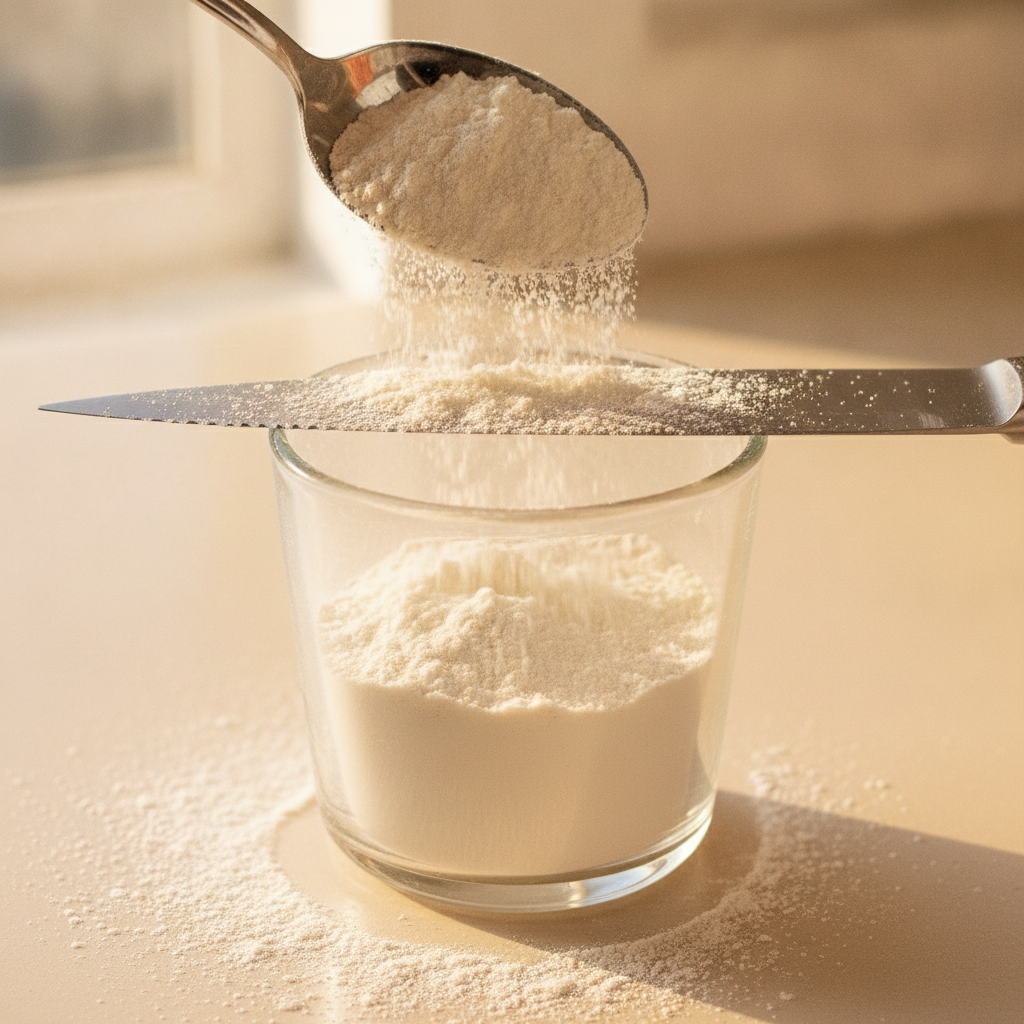
How to measure flour without a scale comes down to one habit: fluff the flour, spoon it lightly into your cup, then level it off with a knife. Never scoop straight from the bag.
Part of our How to Measure Baking Ingredients guide.
- Scooping packs flour down and can add 20-30% extra, making cakes dry and dense.
- Use the fluff, spoon and level method for far more consistent cups of flour.
- A scoop can weigh 150g+ where a spooned cup weighs about 120g – a huge difference.
If your cakes keep coming out dry, tight or crumbly, your flour is almost certainly the culprit. The fix is quick, free and works with the cup measures you already own.
Why does scooping flour ruin your cakes?
When you dip a cup into the bag, the cup presses down and compacts the flour. Air gets squeezed out and far more flour packs in.
Most recipes are written for a lightly measured cup, roughly 120g of plain flour. A firmly scooped cup can easily hit 150g or more.
That means a three-cup cake recipe could gain almost a whole extra cup of flour. Excess flour absorbs the liquid meant for a tender crumb, leaving you with a dry, heavy bake.
How much extra flour does scooping really add?
In my own kitchen tests, a scooped cup of plain flour regularly weighs 145-155g. A properly spooned and levelled cup lands around 120-125g.
That is a 20-30% difference from a single habit. Over several cups, it explains why the same recipe behaves differently every time.
How to measure flour without a scale: the spoon and level method
This is the technique professional bakers reach for when a scale isn’t to hand. It takes about fifteen seconds per cup.
- Fluff the flour. Stir it in the bag or container with a spoon to loosen it and add air back in.
- Spoon it in. Gently spoon the flour into your measuring cup until it mounds over the top. Don’t tap or shake the cup.
- Level it off. Drag the flat back of a knife across the rim to sweep away the excess.
That’s it. The golden rule is never to dip the cup directly into the flour.
Why the fluff step matters
Flour settles and compacts as it sits, especially in a full bag. Fluffing resets it so your spoonfuls are light and even.
Skip this step and even careful spooning gives you a slightly heavier cup. Ten seconds of stirring genuinely improves your results.
Scooped vs spooned: how big is the difference?
Here is how a standard US cup (236.6 ml) of common ingredients compares when scooped versus spooned and levelled.
| Ingredient (1 cup) | Scooped | Spoon & level |
|---|---|---|
| Plain flour | ~150g | ~120g |
| Self-raising flour | ~150g | ~120g |
| Wholemeal flour | ~160g | ~130g |
| Icing sugar | ~135g | ~120g |
For exact figures on any ingredient, our cups to grams converter gives you the weights in one tap. These gaps compound in bigger recipes, which is why measuring flour correctly matters so much.
A real example
Take a classic Victoria sponge calling for 2 cups of self-raising flour. Spooned, that’s about 240g – the amount the recipe expects.
Scooped, you could be adding 300g. That extra 60g is exactly why the sponge turns out dry and tight rather than soft and springy.
Common mistakes to avoid
- Dipping the cup into the bag. Fix: always spoon the flour into the cup instead.
- Tapping or shaking the cup to level it. Fix: tapping settles the flour and packs more in – level with a knife only.
- Skipping the fluff step. Fix: stir the flour first so it isn’t compacted.
- Using a mug instead of a proper cup measure. Fix: a mug isn’t 236.6 ml, so use real measuring cups.
- Pressing flour down to “fit” it. Fix: let it mound naturally and sweep off the excess.
Is a kitchen scale really more accurate?
Yes – and it’s the single best upgrade for your baking. Cups measure volume, but flour’s volume changes with how packed it is.
Weight never lies. 120g of flour is 120g whether it’s fluffy or settled.
A basic digital scale costs very little and removes the guesswork entirely. If you bake often, weighing your flour is the most reliable way to get consistent results.
The King Arthur Baking test kitchen also treats weight as the gold standard and lists a US cup of flour at 120g – the same figure the spoon and level method aims for.
What if I’m halfway through a recipe?
No scale to hand? The spoon and level method will still get you close enough for a lovely bake.
If you need to adjust quantities up or down, our recipe scaler keeps every ingredient in proportion. And for a quick reference across common ingredients, save our recipe conversion chart.
Does this work for other ingredients?
Spoon and level works well for cocoa, icing sugar and cornflour – anything fine and prone to compacting.
Brown sugar is the exception. It’s meant to be firmly packed, so press it into the cup as the recipe states.
Granulated sugar and liquids don’t compact, so measure those normally. The spoon and level trick is mainly there to protect you from over-measuring flour.
The one tip to remember
If you take away nothing else: never scoop, always spoon and level. That one change will transform dry, dense cakes into soft, tender ones.
Better still, invest in a cheap scale and weigh your flour at 120g per cup. Your future bakes will thank you.
Got a favourite measuring trick, or a bake that keeps going wrong? Share it in the comments below – I’m always happy to help you troubleshoot.
Try it yourself
Don’t want to do the maths by hand? Use our free tool below.
Frequently asked questions
How many grams is a cup of flour with the spoon and level method? A cup of plain or self-raising flour measured by the spoon and level method weighs about 120g. Scooped straight from the bag, the same cup can weigh 150g or more, which is why scooping so often leads to dry bakes.
Do I really need to fluff the flour first? Yes, it makes a real difference. Flour compacts as it settles in the bag, so stirring it for a few seconds adds air back in. This ensures your spooned cup is light and consistent rather than quietly packed and heavy.
Is measuring flour by cups ever as accurate as a scale? No. Cups measure volume, which changes depending on how packed the flour is, while weight is always exact. The spoon and level method gets you close, but a digital scale set to 120g per cup of flour is the most accurate option by far.
Should I spoon and level brown sugar too? No. Brown sugar is meant to be firmly packed into the cup, so press it down as your recipe directs. The spoon and level method is for fine, easily compacted ingredients like flour, cocoa, icing sugar and cornflour.